Product details description
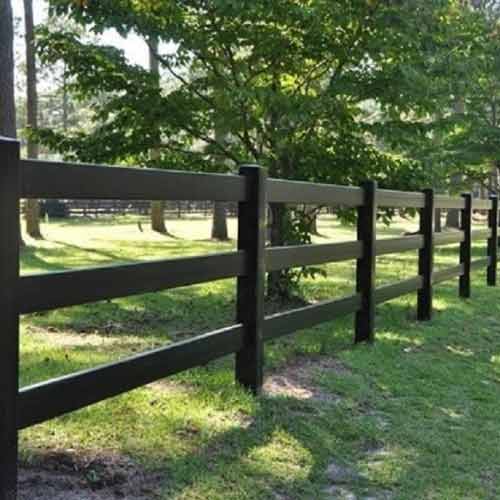
Split rail fences, with their rugged, horizontal log rails resting in
vertical posts, epitomize rustic charm, tracing their roots to colonial America
where they demarcated farmland and pastures. Installing these panels using
traditional methods honors their heritage while ensuring structural integrity,
blending handcrafted skill with practical know-how to create boundaries that
feel both timeless and purposeful.
Site preparation lays the groundwork for success. Begin by surveying the
property to mark the fence line, ensuring it follows natural contours and avoids
obstacles like large rocks or tree roots. Clearing vegetation and leveling the
ground slightly (without altering the landscape drastically) prevents uneven
settling. For sloped terrain, decide whether to use a stepped approach (rails
follow the slope in segments) or a racked method (posts are angled to keep rails
level), depending on whether a rustic, organic look or a more uniform appearance
is desired.
Post installation is the backbone of stability. Traditionally, posts are
made from cedar or locust—rot-resistant woods that withstand outdoor exposure.
Digging post holes 2–3 feet deep (deeper in sandy or loose soil) ensures
anchorage. A layer of gravel at the hole’s base improves drainage, reducing rot
risk. Set posts plumb using a level, then backfill with soil mixed with concrete
for added strength; for a purely traditional approach, compact soil firmly
without concrete, relying on the wood’s natural resilience. Spacing posts 8–12
feet apart accommodates standard rail lengths and prevents sagging.
Rail placement follows a deliberate sequence. Each rail is laid across two
adjacent posts, with ends resting in notches (called mortises) carved into the
posts. Traditional notching uses a chisel or axe to create interlocking joints,
which distribute weight evenly and prevent rails from shifting. For added
security, wooden pins or nails (preferably galvanized to resist rust) secure the
rails, though purists argue that gravity and precise notching alone suffice.
Rails are typically spaced 12–18 inches apart vertically, balancing openness
with containment—closer spacing for containing livestock, wider for decorative
purposes.
Securing the structure involves final adjustments. After all rails are in
place, check for levelness and plumb, trimming posts if necessary. Tighten any
loose fasteners and apply a wood preservative to exposed ends and cut surfaces,
protecting against moisture and insects. Traditionalists may opt for linseed
oil, which nourishes the wood and enhances its natural grain, while modern users
might choose synthetic sealants for longer-lasting protection.
Traditional split rail installation is more than a technical process—it’s a
tribute to craftsmanship. The result is a fence that ages gracefully, developing
a silvery patina that deepens its rustic character. By adhering to time-tested
methods, homeowners connect with a legacy of rural ingenuity, creating
boundaries that are as much about story as they are about function.
Previous article:
Innovative Wildlife-Friendly Designs for Split Rail Fence Panels
Next article:
Eco-Friendly Split Rail Fencing